Ceramic Coating vs Wax in 2026: What Actually Lasts
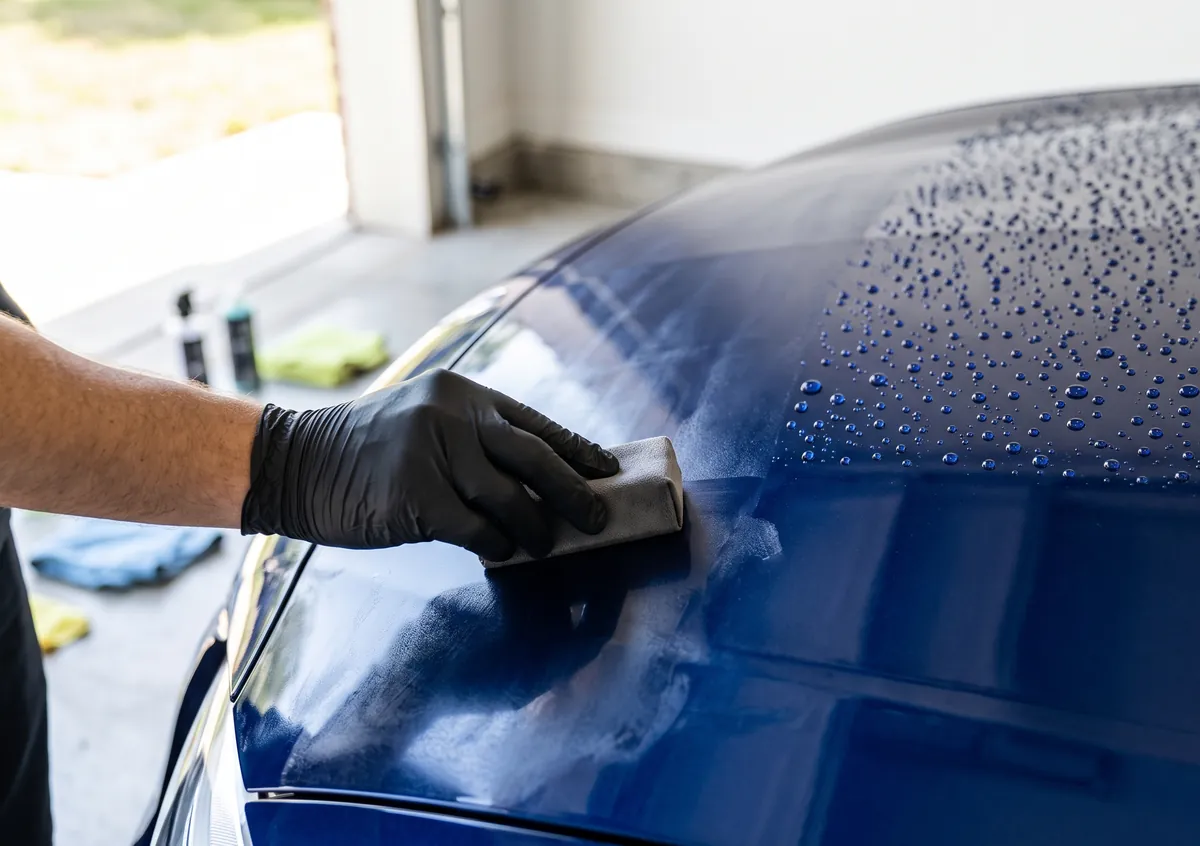
Ceramic coating vs wax: I sell ceramic coatings for a living, and I'm still going to tell you that for most daily drivers, a $20 bottle of sealant applied twice a year beats a $1,200 coating that never gets maintained.
That sentence has cost me money over nine years of detailing in Tampa. It's also earned me customers for life, because the ones who get the right product for their actual situation come back. So here's the honest version of the ceramic vs wax conversation, including what the marketing oversells and what Florida sun does to all of it.
What These Products Actually Are
Skip the chemistry degree. Here's the plain-English version of what you're putting on your paint.
Wax
Carnauba wax is a natural substance from a Brazilian palm tree, blended with solvents and oils so you can spread it. It sits on top of your clear coat like a layer of butter on toast. It bonds physically, not chemically, which means heat, rain, soap, and UV strip it off over time. The payoff is a warm, deep look that wax guys love, and a forgiving application that's almost impossible to mess up.
Paint sealant
A sealant is the synthetic version of wax: lab-made polymers instead of palm wax. The polymers cross-link into a more durable film than carnauba, so it lasts months instead of weeks. Looks slightly "glassier" and less warm than wax, though honestly, on a silver Camry in a parking lot, nobody alive can tell the difference.
Ceramic coating
A true ceramic coating is a liquid polymer, usually based on SiO2 (silica), that chemically bonds with your clear coat and cures into a hard, semi-permanent glass-like layer. It doesn't sit on the paint; it becomes part of the surface until it's abraded or polished off. That chemical bond is why it lasts years instead of months, and why bad application is expensive: you can't just wipe off a mistake, you have to polish it out.
Consumer ceramics come in spray or small bottle form. Professional ceramics are higher-solids products that require paint correction first, controlled application, and cure time. Same family, different concentration and prep.
What Actually Lasts in Florida Sun
I work in Tampa. UV here is a paint product torture test, and everything dies faster than the label says. Here's my real-world experience, hedged as exactly that, my experience, not a lab study:
| Protection | Label promise | What I actually see in Florida |
|---|---|---|
| Carnauba wax | "Months of protection" | 3 to 6 weeks |
| Paint sealant | "Up to 12 months" | 3 to 5 months |
| Spray ceramic / SiO2 toppers | "Up to 1 year" | 2 to 4 months |
| Consumer ceramic coating | "3+ years" | 1 to 2 years with decent care |
| Professional ceramic coating | "5 to 9 years" | 2 to 4 years with real maintenance, longer if garaged |
Two patterns worth noticing. First, everything real-world lands at roughly a third to a half of the label claim down here. Milder climates and garaged cars do better. Second, the gap between a good sealant and a neglected ceramic coating is much smaller than the price gap suggests.
If you're not in the Sun Belt, stretch those numbers, but the ranking never changes: wax, then sealant, then consumer ceramic, then pro ceramic.
Cost Comparison: DIY Wax to Pro Ceramic
| Option | Upfront cost | Time | Realistic lifespan | Cost per year of protection |
|---|---|---|---|---|
| DIY carnauba wax | $15 to $40 | 1 to 2 hrs, repeated monthly-ish | Weeks per application | $50 to $150/yr in product and your Saturdays |
| DIY sealant | $15 to $30 | 30 to 60 min, 2 to 4 times a year | 3 to 5 months per application | $20 to $40/yr |
| DIY consumer ceramic | $70 to $150 in product, plus prep supplies | A full weekend done right | 1 to 2 years | $50 to $150/yr |
| Pro ceramic coating | $1,200 to $2,000+ including correction | Drop the car off | 2 to 4 years real-world | $400 to $800/yr |
Product examples, since people always ask: a classic paste like Meguiar's Ultimate Paste Wax for the wax route, a sealant like Griot's Garage 3-in-1 Ceramic Wax or P&S Bead Maker as a drying-aid topper, and for the DIY ceramic crowd, CarPro Cquartz or Adam's Polishes Graphene Ceramic Coating are legitimate consumer options. The full list of what I actually stock in my vans is in the supplies guide.
Notice the cost-per-year column. The pro coating is the most expensive protection per year by a wide margin. What you're buying isn't cheaper protection. You're buying convenience, gloss, hardness, and not having to think about it. Those are real things. They're just not the things the marketing says.
What the Marketing Oversells
I install coatings. I like coatings. And the industry talks about them like they're a force field, so let me deflate the big three claims:
- "Self-healing." That's ceramic-marketing bleed-over from paint protection film (PPF). Quality PPF genuinely self-heals light swirls with heat. Ceramic coatings do not. A coating is hard, not magic. It resists light marring better than bare clear coat, and that's the honest end of the sentence.
- "Never wash your car again." A coated car still gets dirty. It gets less dirty, lets go of dirt easier, and dries faster. You still have to wash it, and if you run it through swirl-o-matic tunnel brushes every week, you'll grind the coating down and put swirls in it anyway.
- "Scratch proof / 9H hardness." 9H refers to the pencil hardness scale, not Mohs. Your coating will not stop a key, a shopping cart, a tree branch, or an automatic wash brush. It helps with wash-induced micro-marring. That's it.
- "$249 ceramic coating special." Real coating jobs are mostly prep: decontamination, usually a polishing pass, panel wipe, then application and cure. A $249 "ceramic" job skipped the prep, which means they locked whatever swirls you had under a hard layer. You paid to preserve your scratches.
Who Should Pick Which
After nine years of these conversations in driveways, here's how I actually sort people:
- Pick wax if you enjoy waxing the car. Seriously, that's the use case in 2026. It's a hobby product with a beautiful finish and the durability of a paper umbrella. Garage queens and Sunday cars.
- Pick a sealant if you have a normal daily driver, park outside, and want the best protection-per-dollar that exists. Two or three applications a year, 45 minutes each. This is what I recommend to most people who ask.
- Pick a consumer ceramic if you're handy, you'll actually do the prep, and you want 1 to 2 years of low-effort beading for about a hundred bucks. Great middle ground for people who keep cars a long time.
- Pick a pro ceramic if the car is new or freshly corrected, you'll own it 4+ years, you wash it properly (two bucket or rinseless, never tunnel brushes), and the $1,200+ doesn't sting. Also the right call for dark-colored cars whose owners care about gloss, and for people whose time is worth more than their money.
- Skip the pro ceramic if you lease, you use brush tunnel washes, or the car lives outside and gets washed quarterly. You will not get your money's worth, and any honest installer will tell you so.
Maintenance Reality After a Coating
This is the part nobody tells you before you pay. The coating isn't the end of car care, it's a commitment to a specific kind of car care:
- Wash every 2 to 3 weeks with a pH-neutral soap and proper technique. Bird droppings and love bugs (a Florida classic) etch coatings too if they bake on.
- Decontaminate and top once or twice a year. Most installers recommend an SiO2 topper to refresh the surface. More product, more time or money.
- Annual inspection if you want the warranty honored. Many "5-year warranties" require documented annual maintenance visits, usually $100 to $200 each. Read the terms before you buy the promise.
- Neglect undoes it. A coating that never gets washed develops water spots and bonded contamination that degrade it years early. This is exactly how a $1,200 coating ends up losing to a $20 sealant on a car that gets a proper wash.
A maintenance-washed car is a water user, by the way. If you're doing those washes at home, a setup that meets the EPA's WaterSense efficiency guidance cuts the gallons you burn keeping a coated car spotless, which matters more than people think when the wash cadence is every two to three weeks.
If you'd rather have a pro handle the maintenance washes, that's literally what mobile detailers are for: find a mobile detailer near you who offers coating maintenance plans. And if you're a detailer who does, get listed in the directory, because coated-car maintenance clients are the best recurring revenue in this business.
Frequently Asked Questions
Does ceramic coating last longer than wax?
Yes, by a wide margin. Carnauba wax lasts weeks, a synthetic sealant lasts a few months, a consumer ceramic lasts one to two years, and a professionally installed coating lasts two to four years in harsh sun and longer if the car is garaged and properly maintained. The ranking never changes; what changes is how much each one costs and how much prep it demands.
Is a ceramic coating worth it over wax?
It depends entirely on how you'll treat the car. A coating is worth it if the car is new or freshly corrected, you'll own it four or more years, you wash it properly, and the $1,200-plus doesn't sting. For a normal daily driver that parks outside and gets washed quarterly, a sealant applied twice a year gives you the best protection per dollar, and the coating won't pay you back.
How long does ceramic coating really last in hot, sunny climates?
In real-world Florida sun I see consumer ceramics hold up roughly one to two years and professional coatings two to four years with genuine maintenance. That's well under the three-plus and five-to-nine year numbers on the label, because intense UV ages every paint product faster than lab conditions. Milder climates and garaged cars do noticeably better.
Is a $249 ceramic coating a good deal?
No. A real coating job is mostly prep: decontamination, usually a polishing pass, and a panel wipe before anything goes on the paint. A $249 "ceramic" special skipped that prep, which means it locked whatever swirls you already had under a hard layer. You paid to preserve your scratches.
Does ceramic coating mean I never have to wash my car?
No. A coated car still gets dirty; it just gets dirty more slowly, releases dirt more easily, and dries faster. You still have to wash it every two to three weeks with proper technique, and running it through tunnel brushes will grind swirls right into the coating. "Never wash again" is the single most oversold claim in the category.
What does 9H hardness actually mean on a ceramic coating?
It refers to the pencil hardness scale, not the Mohs mineral scale, so it does not mean the coating is anywhere near diamond-hard. A 9H coating resists light wash-induced micro-marring better than bare clear coat, and that's the honest end of the claim. It will not stop a key, a shopping cart, a tree branch, or an automatic wash brush.
My Honest Bottom Line
For enthusiasts and long-term owners who will maintain it: a properly prepped ceramic coating is a genuinely great product, and I'm happy to install it. For everyone else with a daily driver and a normal life: buy a sealant, apply it on a spring and fall Saturday, and put the other $1,150 toward literally anything else. Your paint will be fine, and you'll have skipped the most oversold product in detailing.
And since the people who care about paint are usually the people who care about the whole car: if your daily driver has a noise, a light, or a question your detailer cannot answer, JustAnswer's certified mechanics field one-off questions online for a few dollars. Handy for the "is this worth a shop visit" call, which is the automotive version of the sealant-versus-ceramic question.
Curious what the protection options cost when a pro does them? I broke down every package price in mobile detailing prices for 2026. And if all this DIY talk inspired the opposite reaction, maybe you're the type who should be charging for this work instead: start with how to start a mobile detailing business.